
30 January 2025
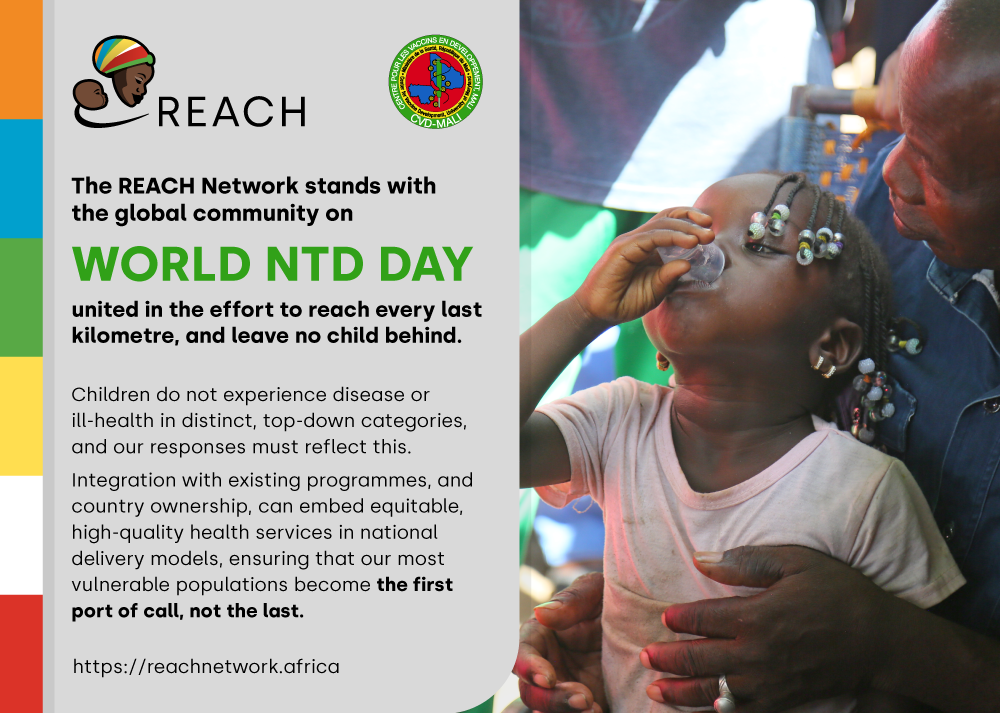
On World Neglected Tropical Diseases (NTD) Day, the REACH Network is proud to join partners and colleagues across the globe to spotlight a shared mission: reaching children and communities too often left behind, and left out of the systems that seek to deliver good health for all.
The burden of NTDs falls disproportionately on the most vulnerable populations – and these are often the same communities who benefit most from REACH integrations for child survival.
The work of both REACH and the NTD community worldwide is focussed on reducing child mortality and strengthening equitable access to lifesaving services, combatting preventable disease and driving down mortality rates.
Reaching millions of children
In 2024, the REACH Network reached some 17 million of the most vulnerable children in high-mortality settings across sub-Saharan Africa.
Many of these children are also those most likely to be exposed to neglected tropical diseases, as a result of poverty, limited access to clean water and sanitation, malnutrition, and fragile health systems.
This overlap is no coincidence – it reflects the structural inequities that both NTD programmes and REACH seek to address.
Global interest
REACH (“Resiliency through Azithromycin for Child Survival”) emerged from a robust evidence base, most notably the MORDOR study, which showed that biannual mass drug administration of azithromycin to young children in high-mortality settings could reduce all-cause child mortality by up to 14 percent.
This landmark finding represented one of the most significant advances in child survival in recent decades and sparked global interest in how such an intervention could be responsibly translated from the research sphere into large-scale country-led implementation.
From the outset, REACH was designed to be adaptive. Today, it operates as a multidimensional delivery and learning platform that prioritises the most vulnerable populations, actively monitors antimicrobial resistance (AMR) rates, strengthens mortality and data systems, and integrates delivery with maternal, newborn and child health, and primary health care services.
Synergies for equitable delivery
The REACH platform approach enables natural and effective synergies with NTD programmes.
All countries implementing REACH are working to integrate meaningfully, so that the investment builds sustainable systems for child survival.
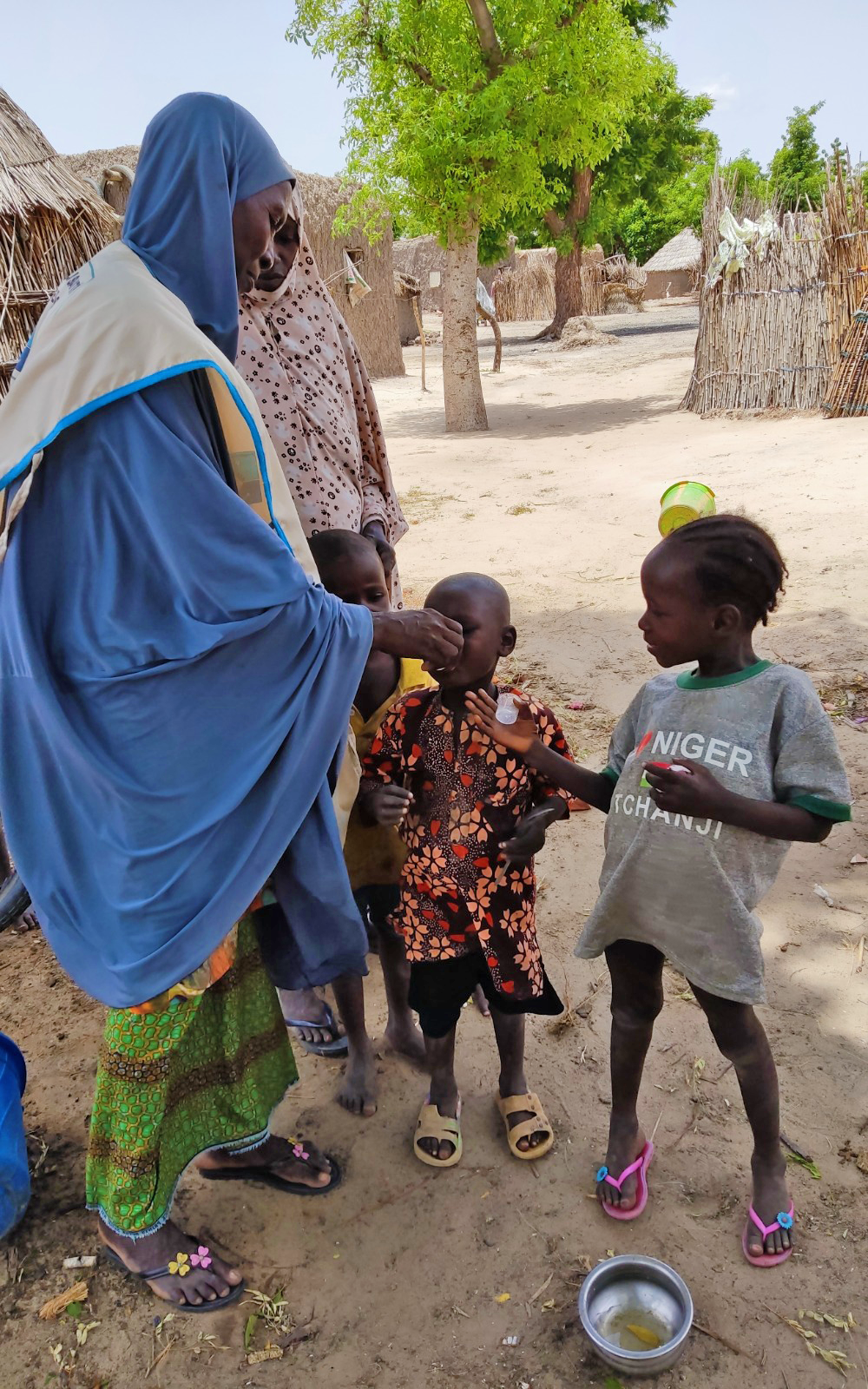
REACH countries are actively integrating with national NTD programmes, aligning delivery systems, community engagement, and monitoring efforts, in order to maximise the coverage of key interventions and reduce duplication.
Working with and through existing country systems and leadership structures, REACH supports more efficient and equitable service delivery to children who face the highest risk both of preventable mortality and NTDs.
A holistic approach
This demonstrates the ways in which combined delivery platforms can simultaneously tackle complex, varied health challenges.
Such cross-sectoral integration also reflects an important, but too often under-appreciated, understanding. Children do not experience disease or ill-health in neat, distinct categories, such that health systems should not seek to address these health issues with distinct, duplicative, top-down programmes either.
Children do not experience disease or ill-health in neat, distinct categories, such that health systems should not seek to address these health issues with distinct, duplicative, top-down programmes either.

Embedding quality services in routine structures
By integrating with existing programmes, and with country ownership and national leadership to the fore, equitable, high-quality health services can be embedded in national delivery models.
REACH is actively contributing to a future where lifesaving interventions are delivered to every child, alongside key treatments for neglected tropical diseases and other vital interventions, in the most remote, hardest-to-access communities in some of the most underserved parts of the world.
On World NTD Day, the REACH Network reaffirms its commitment to making vulnerable populations the first port of call, not the last.
