A reflection on the 2026 Annual Meeting by REACH Network Director, Dr Camilla Ducker

An abridged version of this article has been published on LinkedIn
Last week in Accra, I felt proud of what the REACH Network has become, and encouraged by the leadership in the room. Country representatives and partners brought candour, experience, and a shared determination to improve children’s lives.
Alongside recognition of what teams have achieved in extraordinarily difficult circumstances, there was an honest willingness to ask what we need to do better.
Some of the most valuable exchanges came when colleagues described challenges that others immediately recognised. This is why countries asked for the REACH Network: to learn together and support one another. Strong relationships give people the confidence to seek advice, challenge assumptions and share what has not worked. Our future depends on remaining useful to the countries we serve.
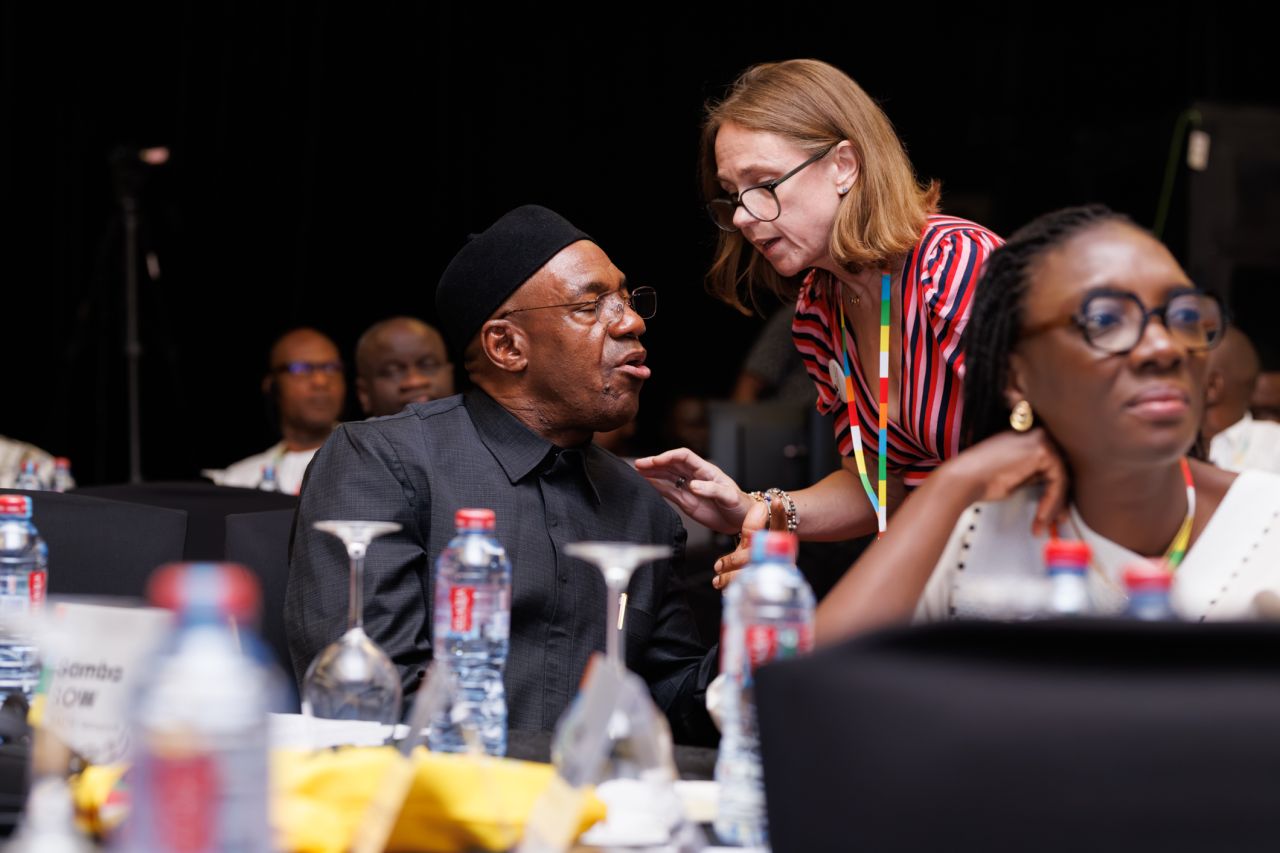
Professor Samba Sow and Dr Camilla Ducker at the REACH Network 2026 Annual Meeting
Responsibility
Country ownership must be visible in who sets priorities, makes decisions and takes responsibility for delivery.
It requires institutions and resources that endure beyond individual projects or changes in leadership. Partners have an important responsibility to align their support with national plans and help countries sustain this work.
Integration brought these responsibilities into focus. Reaching a child in a remote or insecure community can require enormous effort. “One child, one family” asks us to consider how that contact can meet more of the child’s needs.
Making integration central
We are at the beginning of a more deliberate effort to make integration central to the REACH Network. Countries have important experience to build on, but we must understand what works in different settings.
Ministries, communities and programme teams should decide which services belong together, and which existing platforms can deliver them. Adequate financing, well-supported health workers, and clear responsibilities are essential to protecting the quality of every service.
Now is the time to define success and agree how to measure it.
Is integrated delivery feasible? Does it reach children previously missed? Does care improve, and what does delivery demand of health workers?
With guidance from our Costing Technical Working Group, the REACH Network is beginning work to help countries compare the full costs and outcomes of delivering services together or separately. We should claim savings only where country data demonstrate them.
This also tests our leadership. We need the confidence to pursue integration and the humility to learn how to do it well.
That means sharing resources and credit, respecting existing platforms, and letting others lead when they are best placed to do so. Institutional ego must not stand in the way of better care.
As our Co-chairs have consistently emphasised, evidence must guide our decisions. We must continue measuring mortality and morbidity alongside rigorous safety monitoring and antimicrobial resistance surveillance.
Responsible antibiotic use requires us to examine benefits and risks together, and adapt programmes when the evidence demands it.
Sustained investment
That means sustained investment in national laboratories, skilled teams and quality assurance so countries can analyse their own data and act on it.
Good leadership welcomes scrutiny, including findings that challenge our expectations.
The discussions rightly kept returning to communities.
Families and frontline workers understand barriers our data may not fully explain. Their experience must shape programmes, with engagement continuing throughout delivery. We owe communities honest responses to concerns, access to findings and clear explanations of what changed because they spoke.
Equity must remain our measure of progress. High overall coverage can conceal children whom services repeatedly miss, including those without routine immunisation, displaced families and those living far from care. Reaching them may cost more. Our financing must recognise that reality, and our evidence must show whether their access improves.
From Accra to action
I am grateful to our hosts in Ghana and to everyone who contributed, in person or online. I am especially grateful to our Co-chairs, Professor Samba Sow and Minister Muhammad Ali Pate, for their continued commitment and leadership.
They have held firmly to a vision of the REACH Network led by countries, grounded in evidence and focused on children too often missed. Their guidance and trust mean a great deal to me personally, and their commitment gives us the confidence to be ambitious as well as the responsibility to follow through.
Maintaining the momentum
I came away from Accra with the sense of a clear mandate: to ensure that equity, country ownership and integration that improves care remain at the heart of the REACH Network.
Before our next annual meeting, we need more regular, focused conversations between country teams and partners about our priorities: how we integrate, how we measure impact and cost, and how evidence informs programme decisions.
My responsibility is to work with our Co-chairs and members to turn those conversations into action, with clear responsibilities and support that countries can rely on.
We must keep listening to the communities we serve, and follow through on our commitments.
Ultimately, we must be able to show what this work changes for the most vulnerable children and families still waiting for care.