
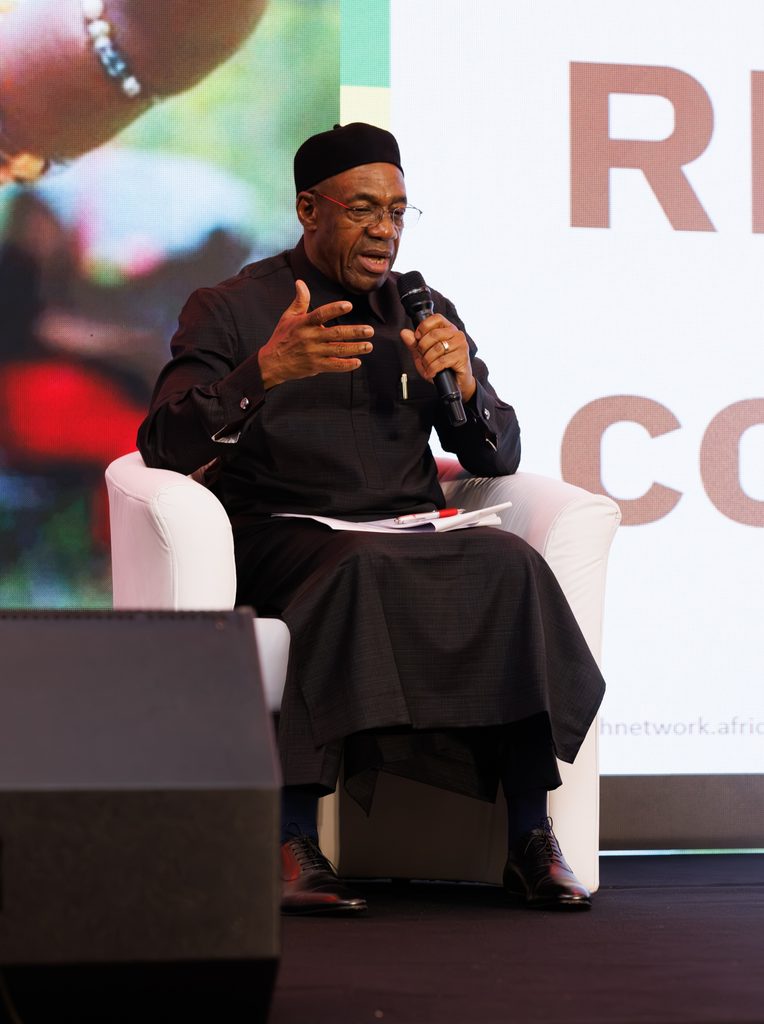
by Professor Samba O Sow, Co-chair of the REACH Network and Director General of the Center for Vaccine Development – Mali
World AMR Awareness Week 2026 #OneHealthOneAction
A child with a serious bacterial infection needs access to an antibiotic that works. That child should also be able to benefit from effective high-quality healthcare throughout their life.
Our responsibility in global health extends across that whole lifetime.
As a global health community, I believe that we need to approach this responsibility with urgency and humility. Decisions about antibiotics must account for the child who is sick today and for the consequences of our actions for years to come. Families have a right to expect us to take both these concerns seriously.
World Antimicrobial Resistance (AMR) Awareness Week is a welcome opportunity to reflect on whether our leadership in this space is meeting that expectation.

Addressing difficult questions
We are confronting antimicrobial resistance in a world increasingly marked by insecurity and division.
As such, the global health discussion must enable us to examine difficult questions together.
When we become more invested in defending a particular position than in understanding the evidence before us, we risk undermining our ability to serve the people who depend on us. We owe it to our children to stay focussed on the evidence, even when it goes against our own convictions.
Country leadership and accountability
For me, country leadership is fundamental to a credible response.
Governments must make decisions that take into account their own populations, their own health systems, and the conditions in which care is delivered. African researchers, clinicians, and communities have a well of knowledge that must shape the questions we ask and the way we interpret answers.
Collaboration and country leadership go together naturally, hand in hand, and international cooperation works best, and is strongest, when it supports national authority and expertise.
That principle must have practical consequences. Countries need to set research priorities, govern and analyse their data, and determine how findings inform policy.
National authorities must be supported to decide where an intervention is appropriate, how it should be adapted, and when it should be paused or stopped.
Those decisions should draw on international guidance, independent scientific advice, and the experience of the communities who face these issues in their day-to-day lives.
Dependable financing
Real authority also requires resources. A ministry cannot act confidently on evidence if it doesn’t have the means to generate or assess it. Laboratories need dependable financing.
Scientists and health workers need opportunities to develop their skills and remain within national institutions. Investments should leave countries better equipped to protect their populations long after an individual project or research grant has ended.
Country leadership brings with its own obligations in this respect too. We must be transparent about our decisions, open to scrutiny and accountable to the families whose health is at stake.
Communities must be provided with honest explanations of the benefits being sought, the risks being investigated, and the uncertainties that remain. More than that, their questions should help shape our work.
The REACH Network, which I co-chair alongside Honourable Minister Muhammad Ali Pate , brings these responsibilities into close focus. Countries are working together to improve child survival, including in settings affected by insecurity and limited access to care. Our research and implementation experience provides opportunities to learn about the effects of azithromycin programmes and to strengthen national capacity for AMR surveillance.
Treading carefully
That opportunity comes with a serious duty of care. Mass administration of azithromycin can lead to greater levels of antibiotic resistance. We must face that evidence directly and investigate what it means for the children and communities we serve.
Crucially, being committed to a particular intervention should never prevent us from examining potential harms or unwanted side-effects.
We must assess mortality, morbidity and resistance together, holistically, and be precise about where benefits have been demonstrated and where uncertainty remains. Our commitment to child survival requires this honesty of us.
Surveillance is valuable when it produces reliable information and changes what happens next. Collecting samples alone cannot establish that a programme is safe. We need sound methods, dependable laboratory results, and analysis that helps distinguish programme effects from wider trends.
National teams must be able to interpret those findings and act on them. Independent expert review is essential to testing our conclusions, especially when the evidence is incomplete or challenges our expectations.
Testing leadership
This is where collaboration becomes a test of leadership. It requires us to share findings that complicate our own arguments, invite expertise that challenges our assumptions, and revise decisions when the evidence warrants it.
Respectful disagreement can – and should – make our work stronger. Respect for colleagues must go hand in hand with demanding standards for evidence, including the evidence supporting our own positions.
The wider response must also connect human health with animal health, food production and the environment.
This year’s World AMR Awareness Week theme, “One Health, One Action: Prevent AMR now”, recognises that shared responsibility. Within health systems, preventing infection through vaccination, safe water, and better infection control must be carried out alongside appropriate diagnosis and treatment.
Good stewardship means protecting the effectiveness of antibiotics while ensuring that people who need them are still able to receive them.
Expertise throughout the life of an intervention
For international partners and funders, collaboration should be visible in sustained support for national priorities. That means financing the surveillance and expertise needed to judge an intervention throughout its delivery, and supporting countries when findings require a change of course.
For national leaders, it means bringing the relevant sectors together, protecting investment in essential capacity, and ensuring that the appropriate evidence reaches those with the authority to act. For all of us, it means making time to listen, particularly to colleagues and communities whose perspectives are too easily overlooked.
I believe we can meet this responsibility. There is great strength in countries’ willingness to learn from one another, and in partnerships that encourage us to ask difficult questions. We should embrace that willingness.
Trust allows evidence to be shared and examined, and honest scrutiny gives that trust substance.
An eye on the future
In the years ahead, the quality of our leadership in global health will be judged by how we were able to navigate challenges such as antimicrobial resistance.
Did we give countries the authority and resources they required to lead? Did we examine inconvenient evidence as carefully as reassuring findings? Did we remain respectful and collaborative when disagreement made that difficult?
Our answers to these questions will be reflected in the care our children receive and the effectiveness of the medicines available to them.
We must, today, demonstrate the courage to let evidence change our decisions, while maintaining the humility that will enable us to do that work together.
Professor Samba Ousmane Sow is Director-General of the Center for Vaccine Development – Mali. He served as Minister of Health and Social Development of the Republic of Mali between 2017 and 2019.
He co-chairs the REACH Network, alongside Professor Muhammad Ali Pate, Coordinating Minister of Health and Social Welfare of the Federal Republic of Nigeria.

